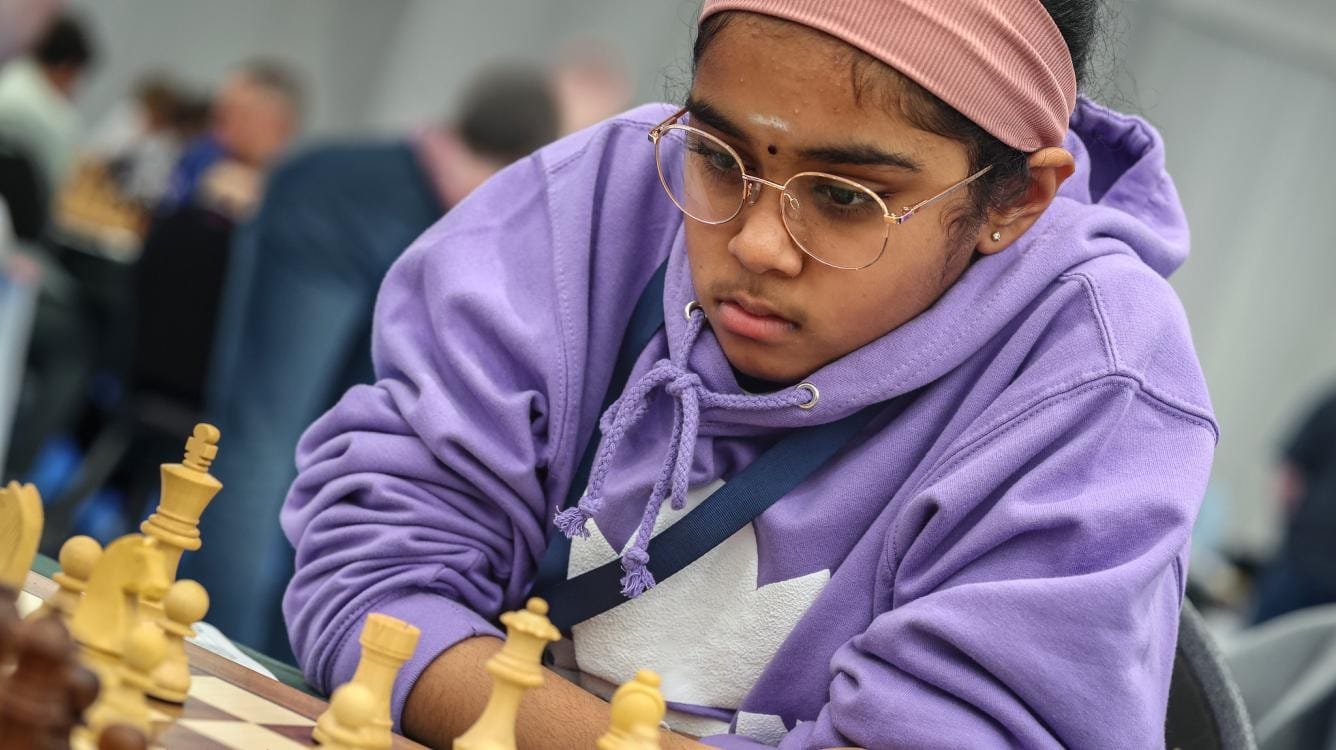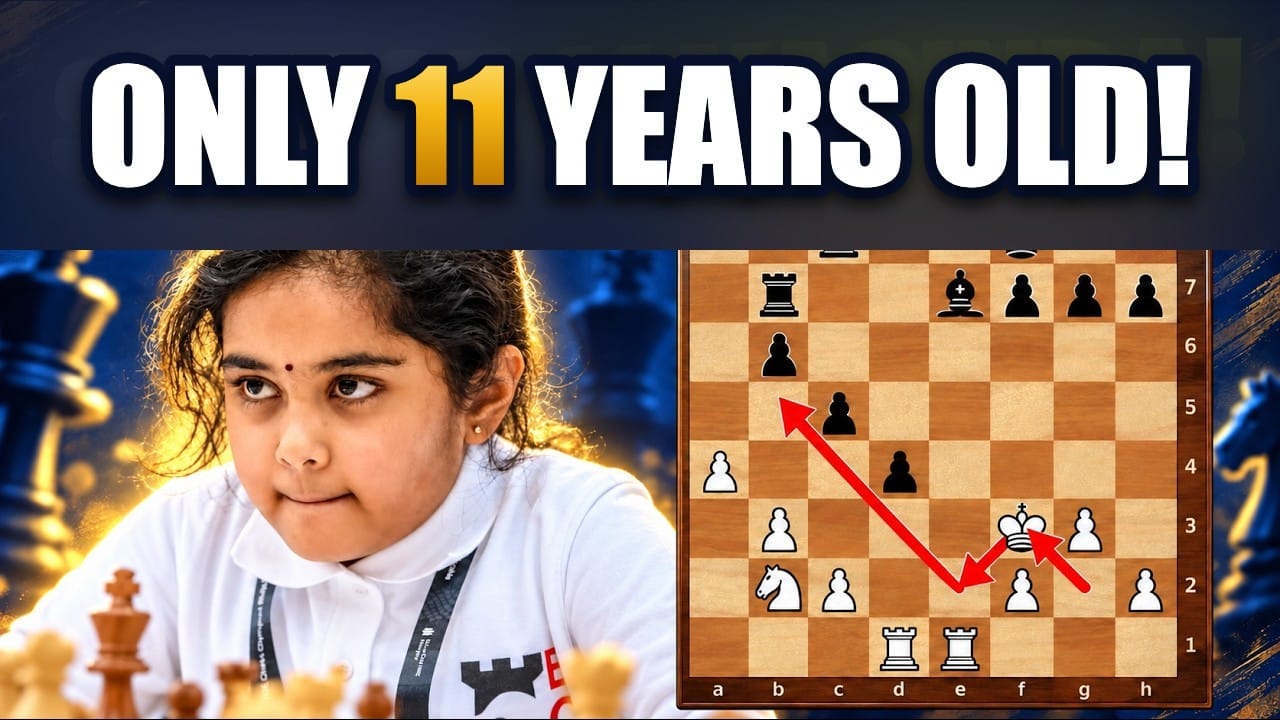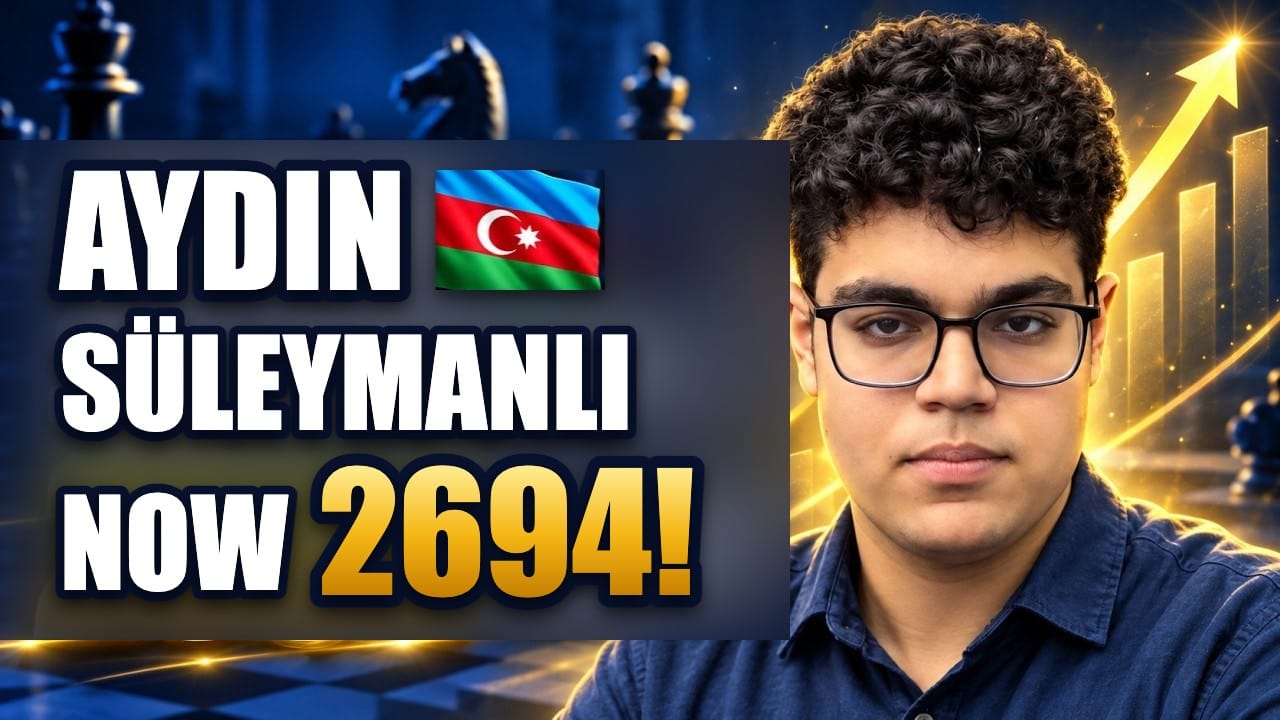
Yağız Kaan Erdoğmuş finally took the stage in round 3 of the 41st European Chess Club Cup in Budva, beating GM Zbyněk Hraček (2525) with the black pieces. The game is an instructive example of choosing the move that keeps the position alive over "the most popular move in theory", of the queenside pawn majority, and of keeping an opponent under constant pressure. The win lifted Yağız to world number 15 on the live rating list.
Below you can play through the whole game with the video commentary, and then try to solve the critical positions that received an exclamation mark in the video.
Annotated Game
Click on the moves, use the buttons under the board or the arrow keys on your keyboard to step through the game. The board is shown from the side of Yağız, who has the black pieces.
Critical Positions
The three positions the video dwells on. In each one it is Black to move. Think first, then open the answer or use the forward button under the board to see the move that was played.
Critical Position 1 – move 18, Black to play
Show answer
18...Be7! With Ng4 White says "come on, let's trade the bishops". Black declines: "You are the one who is cramped, I am not trading." In chess a retreating move that is good deserves an exclamation mark, because our instinct is always to go forward. Taking on g3 would have let White recapture with the h-pawn, handing him the h-file and the Nf4 idea. After Be7 come h4, Ne6, h5 and Nd7, and Black is not afraid of h6: f5 and Bg5 leave that pawn weak.
Critical Position 2 – move 21, Black to play
Show answer
21...f5! A one-move hit that goes after the knight – the kind "even we would find", as the video puts it. Ne5, b5 and Nf4 follow, and after the exchanges a5, Ra1 and b4 leave Black with a three-against-two pawn majority on the queenside. The rest of the game is built largely on that advantage.
Critical Position 3 – move 37, Black to play
Show answer
37...Rxe3+! White cracked under the pressure with 37.bxc4?; he had to hold on with Kf3. Now the rook takes on e3, the king returns to f2, the rook drops back to a3, and after 39.cxd5? 39...Qxg4 made White resign. The threat is Rf3+; had he tried 40.Qe2, then Qf5+, Kg2 and Qxb1 picks up the rook as well. (An immediate Bh4+ does not work: Bg3+ is a counter-check.)
Lessons from the Game
- The most popular move is not always the best practical choice: after 5.e3 theory says d5. Yağız chose Be7, because after d5 White gets a solid but sterile position with b3, Bb2 and Nd2. Against a 2525-rated opponent a draw costs three or four rating points, so the question is not "which move is known" but "which move keeps the position alive".
- Even a forced move needs calculation: 6...d5 left no choice, yet Yağız spent eight minutes on it. The reason was 7.cxd5: Bxf1, dxe6, Bxg2, Rg1 and Rxg7, with White giving up a piece for three pawns and the initiative. The only moves there – c6 and Rf8 – had to be seen in advance.
- Seeing the quiet move from far away: to play the engine's 15...Qf5 you had to imagine a quiet move like Ra8–c8 appearing on move 22. Looking at the position you recognise that it is good; the hard part is thinking of it seven moves earlier.
- A good retreat deserves an exclamation mark: 18...Be7! The bishop stepped back because the trade would have relieved the opponent.
- The queenside pawn majority is a concrete advantage: it is discussed less often than a bad bishop, a good knight, the two bishops or a weakened kingside, but it is worth just as much: it produces a passed pawn, and in the endgame the passed pawn decides.
- Look twice before grabbing a free pawn: 28.Qxf5 was not available – Nxe5, dxe5 and Ra1+, the rook coming in from behind, changed everything.
- With little time left, improve your pieces first: with one minute fifty-eight on the clock came 31...Kf7 and 32...Qe6; instead of diving in with the rook, the king went to a good square and the queen to the centre.
- Pressure produces the mistake on its own: cool play was rewarded with 37.bxc4? and 39.cxd5?. When the opponent is squeezed to the point of shaking hands, there is no need to go looking for a combination.
Notes and Anecdotes from the Video
- "This game is worth telling twice." The first take ran for 17 minutes with no audio recorded, so the commentary was done again from scratch: "with the joy of the win, this game is worth telling a second time." That is also why a few arrows are left on the board.
- Asking a player mid-tournament. You normally leave a player alone during an event: you say congratulations and keep it short. When Yağız replied with thanks, there was a chance to ask – and that is how both the 5...Be7 decision and the reason for avoiding Qf5 were explained.
- The action-film analogy. In the lines where the queen goes, we say "oh no, we have lost a piece, it is over", while grandmasters have already calculated everything: "In action films the hero takes care of everyone; we fall off something and die in the first minute."
- "You are carrying the timber over there." On 22...Rc8 in the Qf5 line: pieces used to be made of wood, so picking up the rook and quietly moving it to c8 looks simple – the hard part is seeing it seven moves earlier.
- "4300 – did I aim too high?" Only the engine finds White's missed 35.bxc4: "The computer is at 4300 – did I aim too high? No, it is around 4400."
- Right behind "Anan". Yağız settled into 15th place on the live list, directly behind Viswanathan Anand. The late Demir Büyüközkaya – a former Istanbul champion and national team player who spent his life with chess and helped generations of juniors – once burst into the club years ago saying "Did you hear, kids? There is a new player called Anan, beating grandmasters in half an hour!" He meant Vishy Anand. We remember him fondly.
- Staying on the list. Anand plays very rarely; one game a year is enough to stay rated. The same rule draws criticism over Nakamura: "he is taking up a spot". Yağız, meanwhile, keeps coming – touch wood.
Video Commentary
Source: the video commentary on the Satranç Okulu YouTube channel (in Turkish) and the Lichess study.